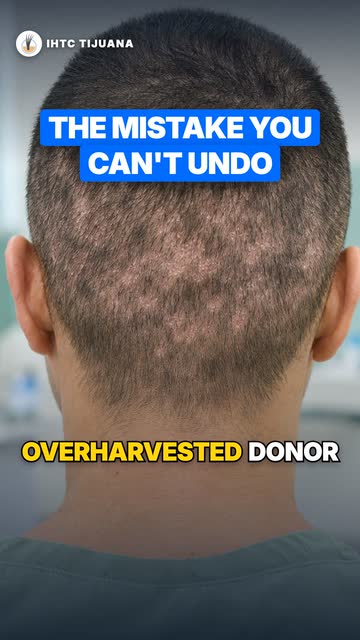
What an overharvested donor area looks like
A healthy donor area after FUE looks the same as before once the hair grows back: the tiny dot scars hide under short hair. An overharvested donor looks moth-eaten: thin, uneven patches where you can see the scalp, often with pale scars so close together they merge. Many patients can no longer wear their hair short.
Why it happens
- Selling big numbers. "5,000 grafts in one day" sounds impressive. If your donor can't safely give that, someone pays the price, and it's you.
- Clustering extractions. Taking grafts close together in one zone instead of spreading them across the whole donor area.
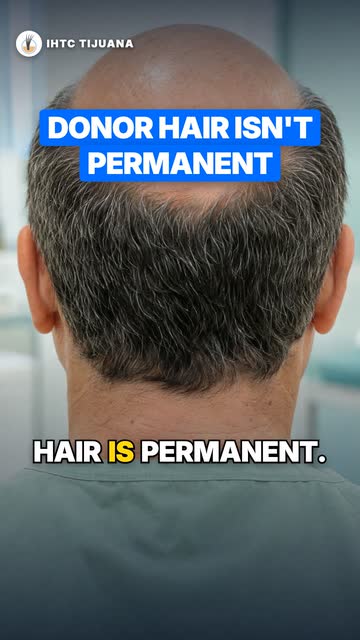
- Going outside the safe zone. Hair from the edges of the donor area may not be resistant to balding. Grafts taken from there can be lost later, and the scars become visible as the surrounding hair thins.
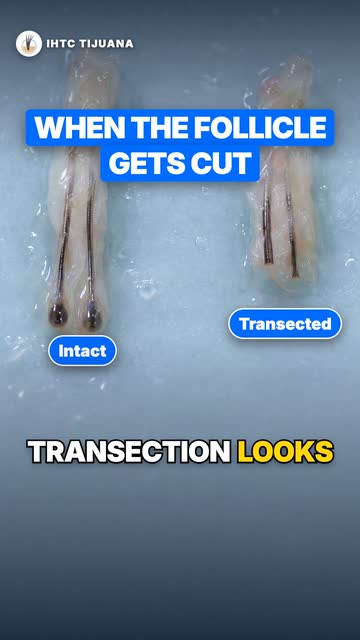
- High transection. When follicles are cut during extraction, more punches are needed to get the same number of usable grafts.
- No records. If nobody tracks how many grafts were taken and from where, a second surgery can push the donor area past its limit.
How it's prevented
There's no universal number, because it depends on your density, the size of your donor area and the thickness of your hair. Many surgeons aim to take only a fraction of the units in any given area, commonly cited as around a quarter to a third, so the remaining hair still covers it. The principles are the same everywhere:
- Measure the donor first: density per square centimeter, hair thickness and how big the safe zone is.
- Spread extractions evenly across the whole safe donor zone.
- Stay inside the safe zone, the area least likely to thin with age.
- Record the count per session, so future procedures know what's left.
- Say no to numbers the donor can't afford, even if the patient asks for them.
Can overharvesting be fixed?
Only partly. Options include scalp micropigmentation to camouflage the see-through look, beard or body hair grafts placed into the thinned areas, and wearing hair longer. Each has limits. Avoiding the problem is far easier than repairing it.
Protect your donor area: ask these first
A careful clinic will already have the answers.
- How many grafts can my donor area safely give, in total?Today, and across your lifetime.
- How will you spread the extractions?Evenly across the safe zone, never clustered.
- Where are the limits of my safe donor zone?Grafts from outside it can be lost later.
- Will you record how many grafts you take, and from where?Essential if you ever need a second session.
- What will the back of my head look like with short hair?Ask to see donor-area photos of real patients.
Frequently asked questions
What is overharvesting in a hair transplant?
It's when too many grafts are taken from the donor area, too close together or from outside the safe zone, leaving it thin, patchy and scarred.
Will my donor area look normal after FUE?
With proper technique and a safe number of grafts, the tiny dot scars are usually hidden once the hair grows back, even with fairly short hair. Very short buzz cuts may show more.
How many grafts are too many?
It depends on your donor density and area, so there's no universal number. That's why your donor should be examined before anyone promises you a graft count.
Can a second transplant fix overharvesting?
Usually not with scalp hair, because the donor is already depleted. Camouflage like scalp micropigmentation, or body and beard hair grafts, are the usual options.
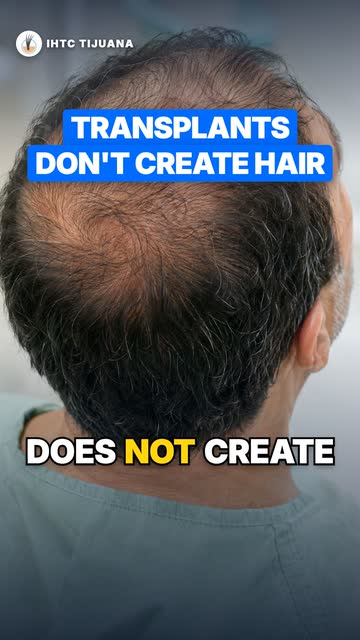
 A transplant won't stop your hair loss
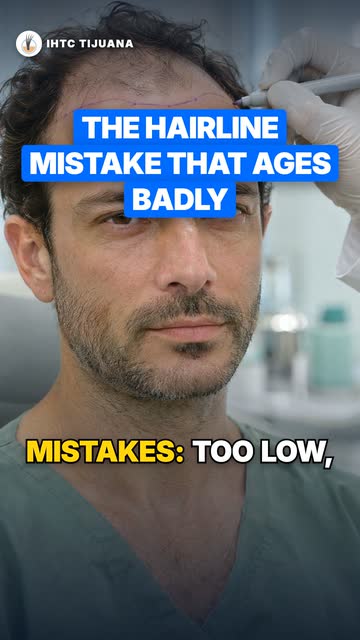 The hairline that looks great at 25 and wrong at 45