What a "graft" actually is
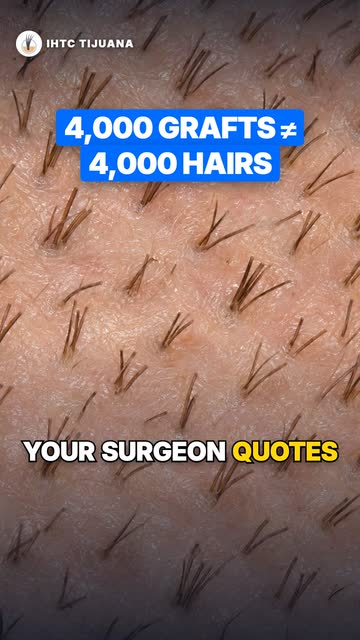
Hair doesn't grow one strand at a time. It grows in tiny natural bundles called follicular units, each with 1, 2, 3 and occasionally 4 hairs. In a modern transplant, each unit is moved intact, and each one is called a graft.
The average is close to 2 hairs per graft, but it varies from person to person. Someone with lots of 3-hair units gets more hair per graft than someone with mostly single hairs. That's one reason why two people with "3,000 grafts" can end up with different results.
The quote trick
Imagine two quotes:
| Clinic A | Clinic B | |
|---|---|---|
| What they say | "7,000 hairs" | "3,500 grafts" |
| What it really is | ≈ 3,500 grafts | ≈ 7,000 hairs |
| Sounds like | Twice as much | Less |
They're the same surgery. A clinic quoting hairs isn't necessarily dishonest, but if you compare it against another clinic's grafts, you'll think you're getting double. Always convert to the same unit.
Where each graft goes matters as much as how many
Good surgeons don't scatter grafts randomly. Fine single-hair grafts go in the very front row to create a soft, natural edge. 2-hair grafts go right behind. The thicker 3- and 4-hair grafts go in the center, where they create density without being seen up close.


That's also why you don't need your original density to look full. Coverage depends on hair thickness, color, curl and contrast with your skin. Roughly half of your original density often reads as a full head of hair. A good plan aims for coverage, not a record count.
Why the biggest number isn't the best deal
- Your donor area is a limited budget. Every graft taken today is one you can't use later. See why donor hair isn't unlimited.
- Survival beats count. 3,000 grafts handled carefully can look better than 4,500 rushed ones that dried out or got cut during extraction.
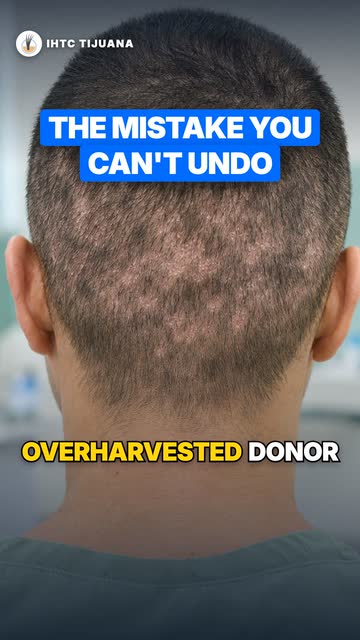
- Overharvesting is permanent. Taking too many in one session can leave the back of your head thin forever. Here's what it looks like.
For typical ranges by stage of hair loss, read How many grafts do I need? and see our transparent pricing.
Make every quote comparable
Send these to every clinic you're considering. Put the answers side by side.
- How many grafts, and roughly how many hairs?Two numbers, not one.
- How many 1-, 2- and 3-hair grafts do you expect?Tells you how much hair each graft really carries.
- Is the price per graft or a fixed package?And what happens if more or fewer grafts are needed on the day?
- How many grafts can my donor area safely give, in total?Today and over your lifetime.
- How do you protect graft survival?Storage, handling and time out of the body.
Frequently asked questions
How many hairs are in one graft?
Between 1 and 4, with an average of about 2. The exact average depends on your own hair.
Is it better to pay per graft or a fixed price?
Either can be fair. What matters is that the number of grafts is based on an evaluation of your donor area and goals, and that you know in advance what happens if the final count changes.
Do all transplanted grafts grow?
Not every single one, and no honest clinic can promise 100%. Survival depends heavily on careful extraction, keeping grafts moist and cool, gentle handling and fast implantation.
Can I get 5,000 grafts in one session?
Some people can, many can't. It depends on your donor density and area. A large number promised before anyone has examined your donor area is a red flag.
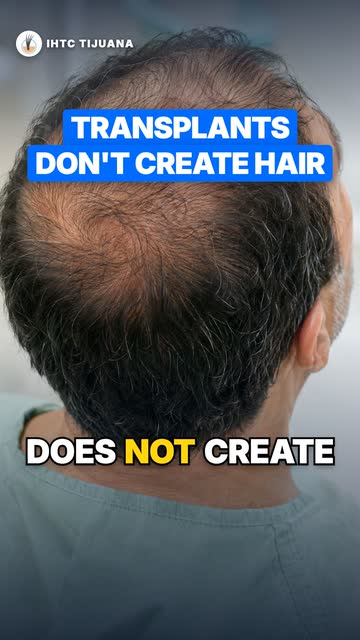 A hair transplant doesn't create a single new hair
 Your donor hair is a bank account, not a fountain
 A transplant won't stop your hair loss