What transection is
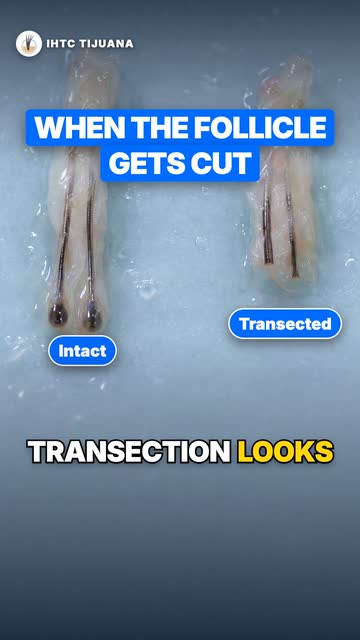
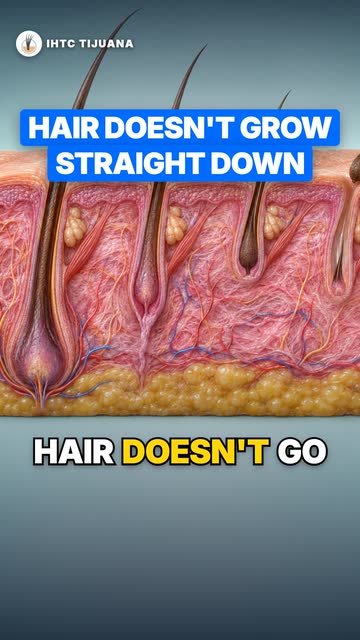
During FUE, the punch cuts around a follicular unit so it can be removed. If the punch angle doesn't match the follicle's path under the skin, or it goes too deep, it can cut through the follicle, either partially or completely. That graft may grow a weaker hair or none at all.
Why it matters twice
- Fewer hairs grow in the recipient area.
- Donor hair is wasted: the follicle was still removed or damaged, and it doesn't come back.
What causes it
- A punch angle that doesn't follow the follicle's path. See why that's hard.
- Going too deep.
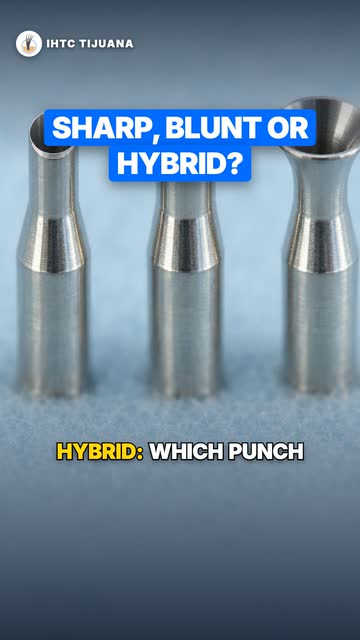
- A punch type or size that doesn't suit the hair.
- Splayed multi-hair units, or curly hair that curves under the skin.
- Fatigue and speed in very long sessions.
How good teams prevent itThey do test extractions, check grafts under magnification as they go, and adjust depth, angle or punch immediately when cut grafts start to appear.
Want to know how we protect your grafts?Ask us how we monitor graft quality during extraction.
Ask on WhatsAppQuestions about graft quality
These reveal whether a team watches what it extracts.
- How do you monitor transection during surgery?Magnification, regular checks.
- What do you do if transection goes up?Adjust depth, angle or punch.
- Who checks the grafts?A trained team member, continuously.
- Do you count usable grafts or all extractions?They're not the same thing.
- How long are your sessions?Fatigue affects precision.
Frequently asked questions
What is transection in hair transplants?
It's when a follicle is cut during extraction, partially or completely, which can stop it from growing.
Can a partially cut graft grow?
Sometimes, but its chances are lower and the hair may be weaker.
Is some transection normal?
Some is hard to avoid entirely, but good teams work to keep it as low as possible.
How can I know a clinic's transection rate?
Ask how they monitor it. A team that tracks it will be able to explain its process.
 You don't need your original density to look full
 3 questions to ask before you book
 Why good transplants look natural: angle