Why minutes matter
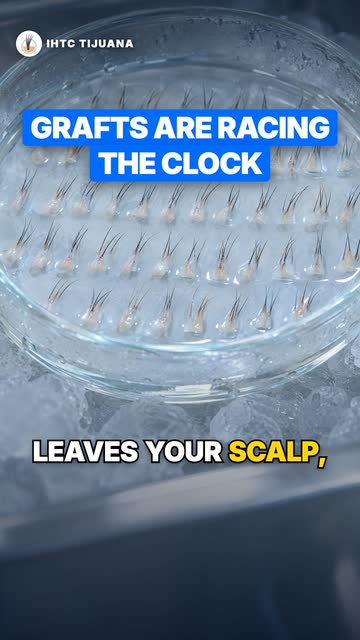
A follicular unit is tiny, and dehydration damages it quickly. A graft left drying on a gauze or a glove for a few minutes can be injured enough that it never grows, even if the surgery looks perfect. The patient can't see any of this happening. They only see the result, months later.
How grafts should be stored
- Always moist, in saline or a specialized holding solution.
- Kept cool, around 4 °C, which slows their metabolism.
- Never frozen, and never in direct contact with ice.
- Sorted and counted by hairs per graft, so they go to the right zone.
- Implanted as early as possible, with a workflow that avoids long waits.
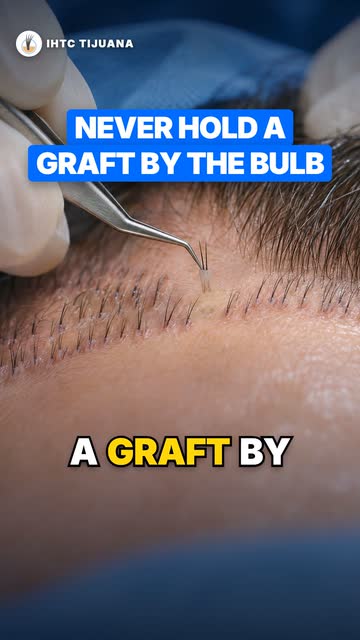
Handling: never hold a graft by the bulb
The bulb and dermal papilla at the base of the follicle are what make the hair grow. Grafts are held by the surrounding tissue instead. Crush a graft, dry it out or force it into its site, and it may never grow. That's the difference between a careful team and a fast one.
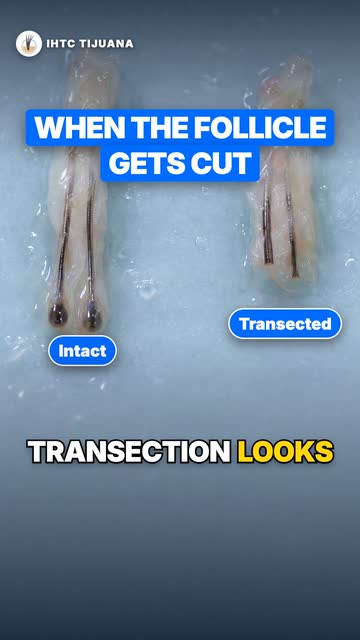
Transection: when the follicle gets cut
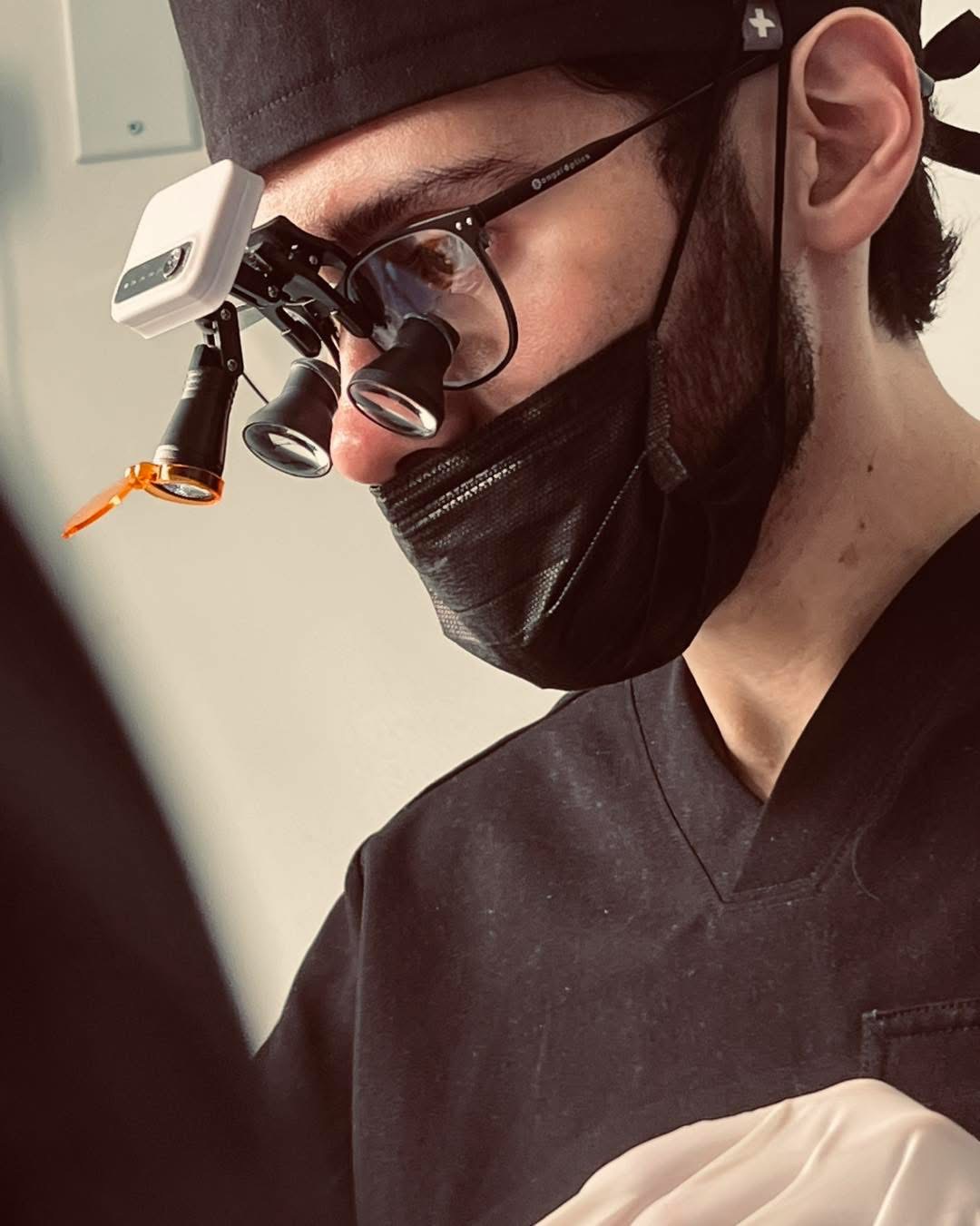
During extraction, the punch can slice through a follicle. A cut graft may not grow. Careful teams check grafts under magnification as they go and adjust the punch, depth or angle to keep transection as low as possible. Lower transection also means fewer punches in your donor area.
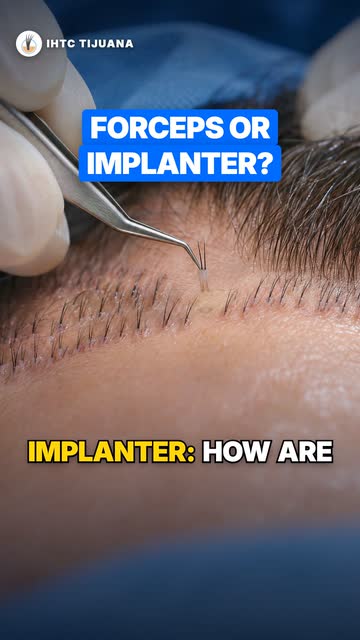
Forceps or implanter?
Grafts can be placed with fine forceps, sliding each one into a pre-made site, or with an implanter pen that loads the graft into a hollow needle and deposits it with a plunger, as in DHI. Implanters protect the bulb from the forceps; forceps are versatile. Both work well in expert hands. At IHTC we combine FUE extraction with DHI implantation. Learn about DHI.
Ask how your grafts will be protected
These questions show whether a clinic takes graft survival seriously.
- How are grafts stored once they're extracted?Solution, temperature, and who monitors them.
- How long do grafts usually wait before implantation?Shorter is better.
- Do you check grafts under magnification?This is how transection is caught and corrected.
- Do you use forceps, implanters or both?And why for my case?
- How many grafts per day do you implant?Very large sessions need a very good workflow.
Frequently asked questions
How long can a graft survive outside the body?
Survival drops the longer grafts stay out, especially if they dry. Keeping them moist and cool and implanting them quickly gives them the best chance.
What is transection in a hair transplant?
It's when a follicle is cut during extraction. A transected graft may not grow, so careful teams monitor and adjust their technique to keep it low.
Is DHI better than FUE?
They're different steps. FUE describes how grafts are extracted; DHI describes implanting them with a pen. Many clinics, including IHTC, combine both. Read our full comparison.
Why do some grafts not grow?
Common reasons include transection, dehydration, crushing during handling, long time out of the body, and poor aftercare in the first days.

 What your eyes can't see, a trichoscope can
 Where should your hairline start? The 7–8 cm rule